- Solutions
- Pricing
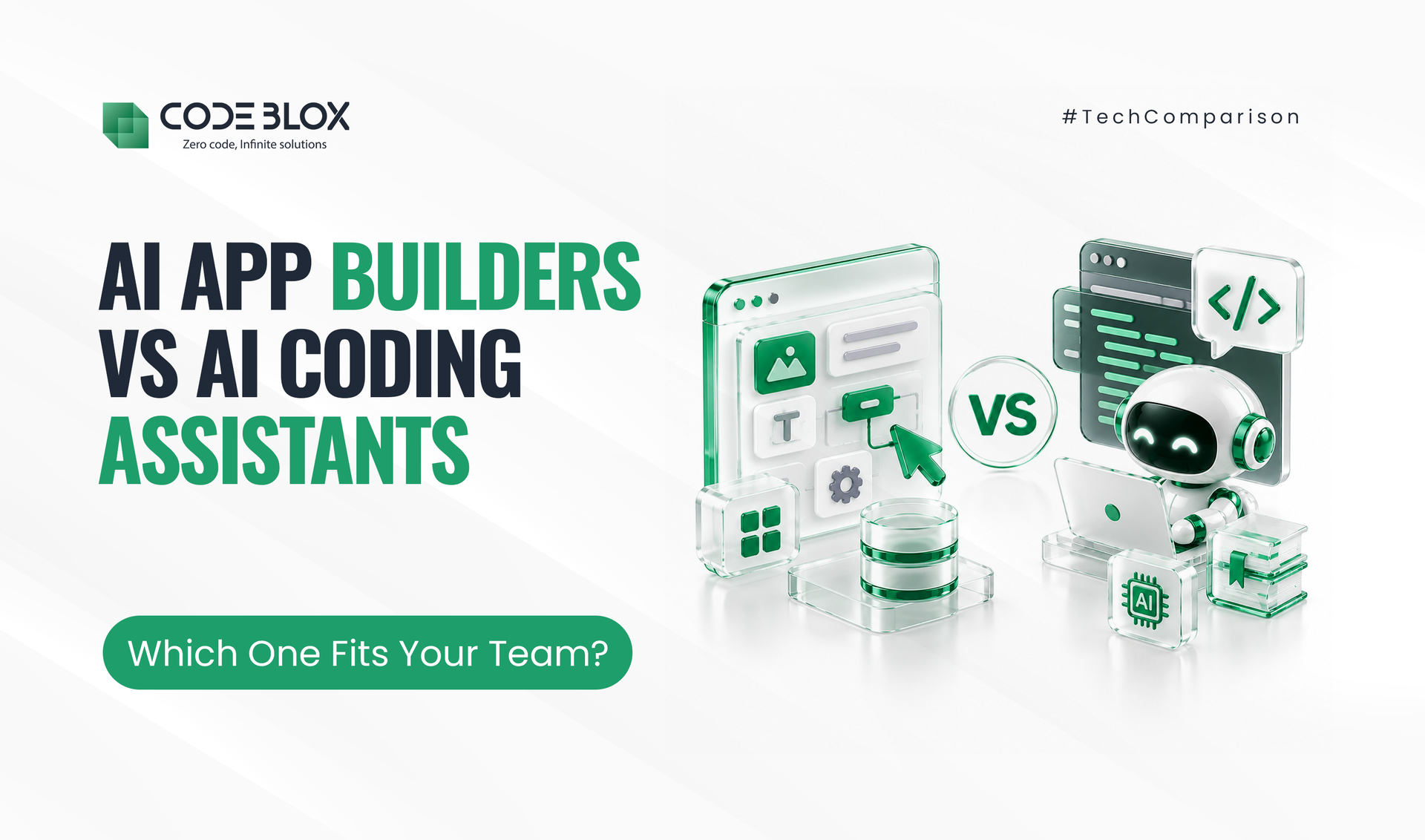
AI app builders and AI coding assistants both use AI to produce software, which is why they often get compared. In practice, they serve different users. App builders are made for business teams who need a working app, while coding assistants are made for developers who write and maintain code.
The right choice depends on the app you need and who will build it. For example, an internal approval tool has very different needs from a product your customers pay for.
This guide compares AI app builders vs AI coding assistants and explains when each one makes sense for your team.
An AI app builder is a platform that creates a complete business application from a description written in plain language. It generates the screens, data structure, workflows, and user roles, and then hosts the finished app so people can start using it right away.
Earlier no code development platforms asked users to drag and drop every field and rule. A modern AI app development platform does most of that setup from a single prompt. For example, a request like "an approval app for purchase requests above $5,000" becomes a form, an approval chain, and a dashboard.
Typical capabilities include:
An AI app builder like CodeBlox is designed for this kind of rapid application development, so business teams can ship tools without waiting in an IT queue.
An AI coding assistant is a tool that works inside a developer's code editor and suggests, writes, or explains code. It speeds up AI software development for people who already know how to program.
These AI programming tools range from autocomplete in an AI code editor to agents that can edit several files at once. In practice, many developers use them for AI pair programming, where the assistant acts like a second engineer who drafts code while the developer reviews it.
Common uses include:
However, the output is still code. Someone has to review it, test it, connect it to a database, and deploy it before anyone can use the result.
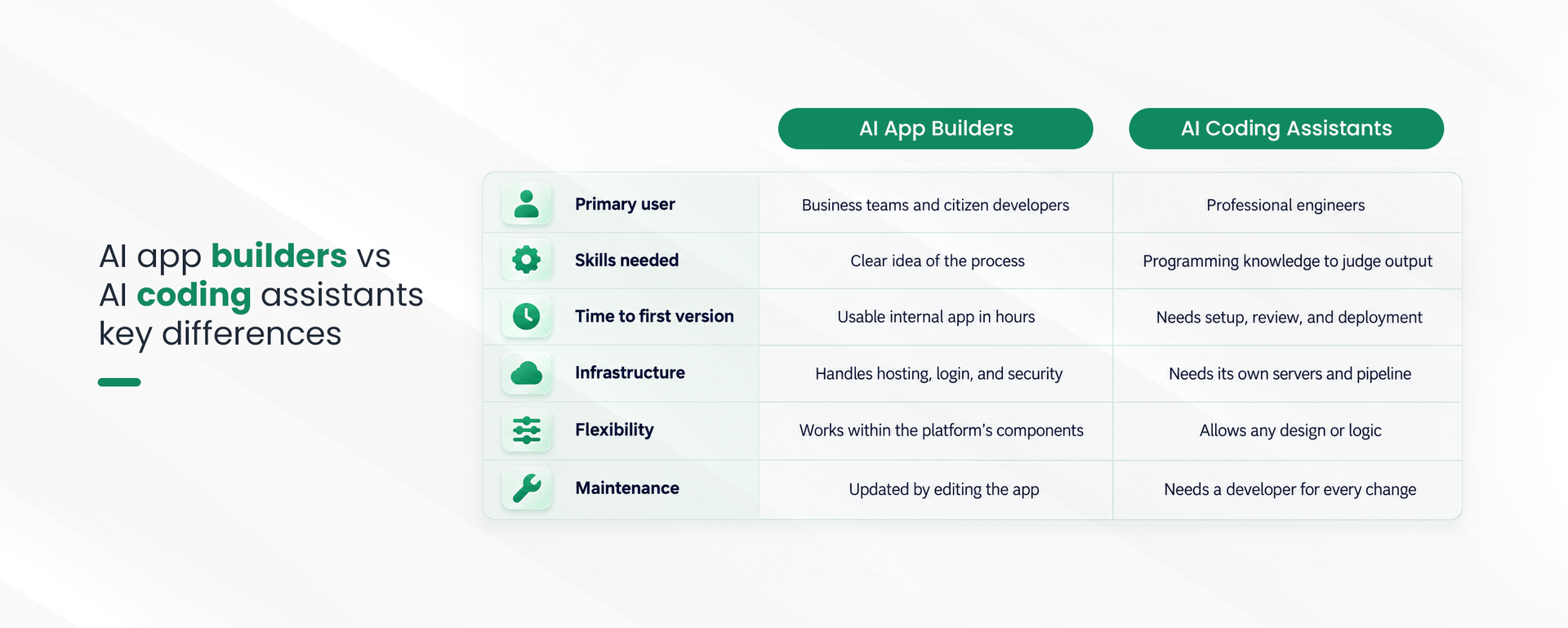
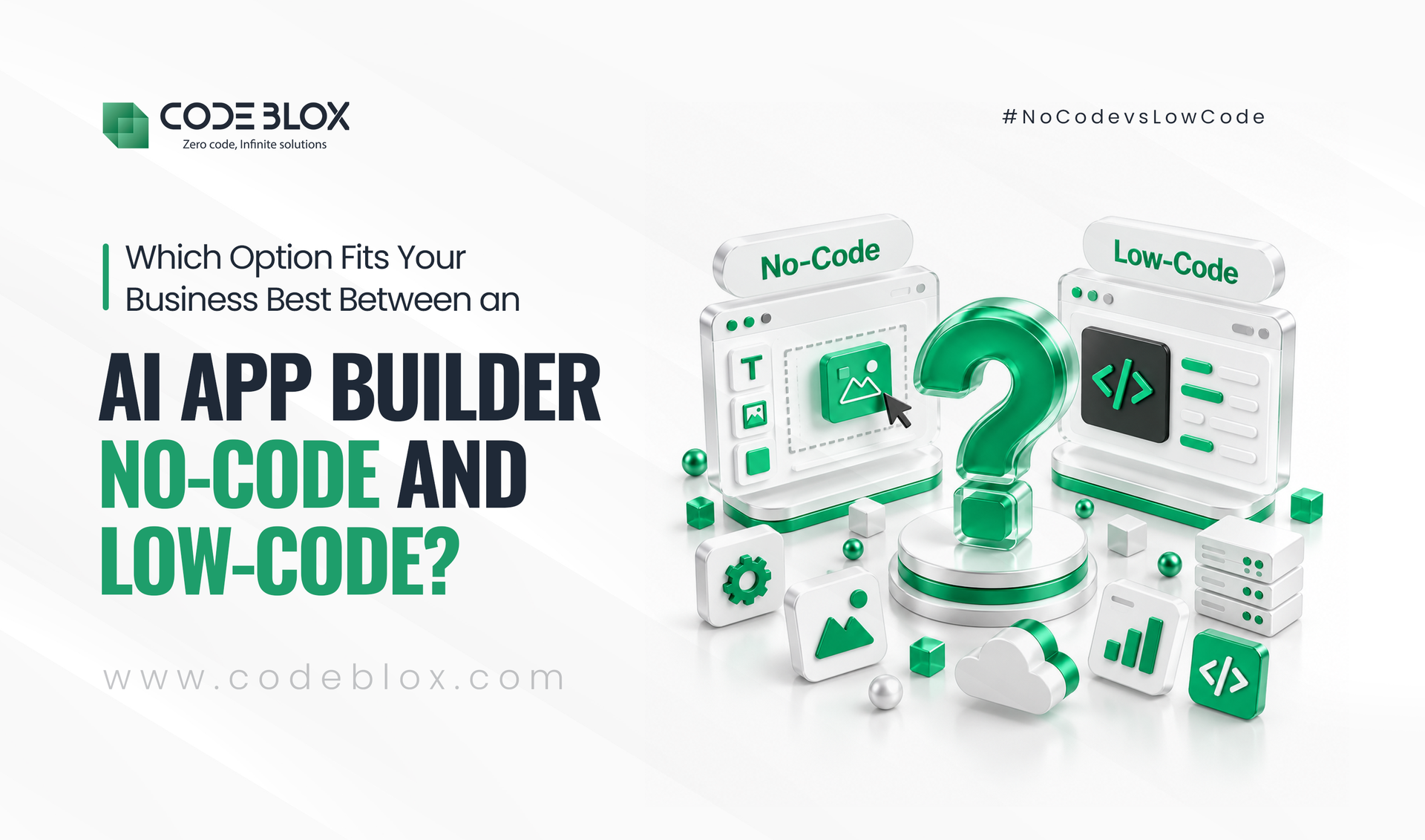
The main difference between AI app builders vs AI coding assistants is the end result. An app builder delivers a running application, whereas a coding assistant delivers code that a developer still has to turn into one.
That single difference shapes everything else:
In short, an AI software builder trades some flexibility for speed and simplicity, and an AI coding assistant does the reverse.
{CTA button:Start building free:https://www.codeblox.com/sign-up:Describe the app your team needs and watch it come together in minutes. }
Choose an AI app builder when the goal is a working internal tool, the team lacks spare developer time, and speed matters more than custom design. This covers a large share of everyday business app development.
Demand for this kind of tool keeps rising. According to Gartner, as reported by InfoWorld, low-code tools will account for 75% of new application development by 2026. Gartner also expects at least 80% of low-code users to sit outside formal IT departments by then.
An app builder is usually the better fit for:
These AI-powered business applications often go live in days rather than months, and the team that uses them can also maintain them.
Choose an AI coding assistant when you are building a complex, customer-facing product that needs full control over code, architecture, and performance. In those cases, custom software development is still the right path, and AI simply helps engineers move faster.
That speed boost is not guaranteed, though. In a randomized trial by the research group METR, experienced open-source developers took 19% longer to finish tasks with AI tools, even though they expected to be faster. Gains depend heavily on the task, the codebase, and the developer.
A coding assistant is usually the better fit for:
Yes, and many companies do. Business teams build internal tools on an AI app builder, while engineers use AI developer tools for the core product. The two then share data, since an AI integration platform can connect builder apps with CRM, ERP, and custom systems.
The right AI development platform depends on who will build it, what they need to build, and who will maintain it afterward. A few direct questions usually settle the choice.
Ask your team:
As a rule, teams that want to build business apps without code should start with an app builder. They can then bring in developers only where the platform reaches its limits.
The choice between AI app builders vs AI coding assistants comes down to the result you need. If the goal is a working business app that your own team can run and change, an app builder gets there faster. If the goal is a complex product with custom code, a coding assistant supports the engineers building it.
For most companies, the answer is a mix. Business teams handle internal tools on a platform, and developers focus their time on the software that sets the business apart.
{CTA button:Try CodeBlox free:https://www.codeblox.com/sign-up:Turn your next internal tool idea into a working app today.}
Find answers to the most common questions about our no-code platform and how it can help you build powerful business application solutions without writing a single line of code.
AI development tools are products that use AI to help create software. They range from coding assistants for engineers to app builders that let business users create apps without code.
An AI code generator uses a language model trained on large amounts of code. It reads a prompt or the surrounding code and predicts the code most likely to complete the task.
An AI coding assistant is a tool inside a code editor that suggests, writes, and explains code. It is designed for developers who can judge and test what it produces.
An AI app builder creates a complete, hosted application from a plain-language description. An AI coding assistant helps developers write code faster, but the result still needs review, testing, and deployment.
An AI app builder is a platform that generates business apps from a prompt, including screens, data, and workflows. Users then refine the app visually without writing code.

Chris has spent more than a decade designing and delivering enterprise software for organizations with complex operational requirements. Drawing from real implementation experience, he writes about enterprise architecture, CRM strategy, digital transformation, software modernization, and the challenges organizations face when scaling business operations.